

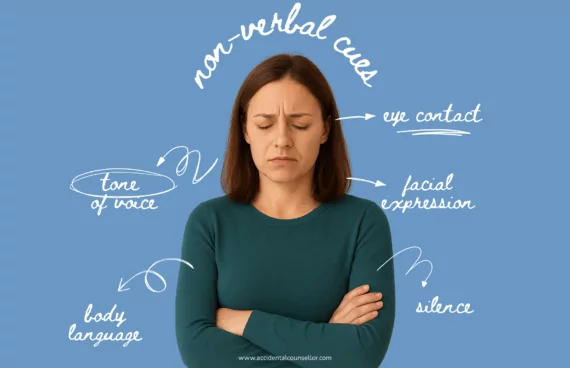
Communication isn’t just about words. In fact, much of what we understand about others comes from non-verbal cues—body language, facial expressions, tone of voice, and even silence. For accidental counsellors—whether you’re an educator, community worker, disability support professional, or allied health staff—being able to read and respond to these subtle signals can make a significant difference in how effectively you support someone in distress.
Why Non-Verbal Cues Matter
Non-verbal communication often reveals emotions or thoughts that words may not fully express. Someone might say they’re fine, but their crossed arms, downcast eyes, or trembling voice might suggest otherwise. Picking up on these cues allows you to respond with greater empathy and precision.
Key Types of Non-Verbal Cues to Observe
- Body Language: Pay attention to posture, gestures, and physical space. Are they leaning away, crossing their arms, or avoiding eye contact?
- Facial Expressions: Micro-expressions—fleeting facial expressions—can indicate emotions such as sadness, anger, or anxiety.
- Tone of Voice: Sometimes, it’s not what someone says but how they say it. Pay attention to pitch, volume, and pace.
- Eye Contact: Avoidance of eye contact can signal discomfort, shame, or fear, while prolonged eye contact might indicate intensity or confrontation.
- Silence: Silence can be powerful—it might mean reflection, hesitation, or a struggle to find the right words.
Practical Tips for Responding to Non-Verbal Cues
- Don’t Jump to Conclusions: While non-verbal cues are important, they’re not always definitive. Combine your observations with active listening.
- Create a Safe Environment: If someone seems closed off, gently reassure them that it’s okay to share at their own pace.
- Reflect What You Notice: Use gentle observations to open a dialogue. For example, “I noticed you looked away when I asked about that. Is there something on your mind?”
- Stay Present: Avoid getting distracted by your own assumptions or thoughts. Focus on the person in front of you.
Using Non-Verbal Cues in Different Settings
- With Children: Children might struggle to articulate their feelings verbally, so their body language and facial expressions often tell the story.
- With Parents: Observe if parents seem tense or hesitant during conversations and respond with empathy.
- With Colleagues: Non-verbal cues might reveal stress or burnout before someone voices it aloud.
- With Clients: Subtle cues might indicate discomfort, fear, or a need for reassurance.
Building Your Awareness of Non-Verbal Communication
Improving your ability to read non-verbal cues takes practice. Some ways to enhance your skills include:
- Practicing Mindfulness: Being present and focused helps you notice subtle cues.
- Observing in Everyday Interactions: Pay attention to how people communicate without words.
- Asking for Feedback: Sometimes, it’s helpful to ask, “I noticed you seemed a bit quiet earlier—was there something on your mind?”
When Words and Actions Don’t Match
If someone’s words and non-verbal cues don’t align, trust the cues. For example:
- They say, “I’m okay,” but their voice is trembling.
- They smile while their shoulders are hunched and tense.
In these situations, gently acknowledge what you notice without pushing. Sometimes, simply saying, “It seems like there might be more going on. I’m here if you’d like to talk,” can open the door.
Final Thoughts
Non-verbal communication is a powerful tool in your role as an accidental counsellor. By staying observant, responding thoughtfully, and creating a safe space, you can help others feel seen and supported—often without them needing to say a word.
Your ability to notice what’s unsaid can build trust, deepen connections, and make a lasting difference.
Download the free resource from this article here.
Visit previous article here: Emotional Intelligence in Accidental Counselling: Why It Matters and How to Develop It
For more information about the Accidental Counsellor Training go to: http://accidentalcounsellor.com/
Interested in attending face to face? Check our venues here.
We also have online sessions available: 3 Hour Training | Full Day Online Training
To invite us in-house to present to your staff or team, leave your details here for a quote and more information.