

Supporting others through emotional distress can be incredibly rewarding, but it also comes with its challenges. For accidental counsellors—whether you’re an educator, community worker, disability support professional, or allied health staff—it’s essential to prioritise your own well-being. Self-care isn’t just a buzzword; it’s a necessity for sustaining your ability to care for others.
Why Self-Care Matters for Accidental Counsellors
Emotional support roles can be emotionally draining, and without adequate self-care, burnout becomes a real risk. Sustainable self-care practices help:
- Maintain emotional resilience.
- Improve focus and decision-making.
- Reduce the risk of compassion fatigue.
- Enhance your ability to support others effectively.
Understanding the Layers of Self-Care
Self-care isn’t one-size-fits-all, and it’s not just about bubble baths and holidays. Effective self-care involves multiple layers:
- Physical Self-Care: Adequate sleep, regular exercise, and balanced nutrition.
- Emotional Self-Care: Setting boundaries, seeking support, and expressing emotions in a healthy way.
- Mental Self-Care: Engaging in activities that stimulate your mind, such as reading or problem-solving.
- Social Self-Care: Maintaining healthy connections with friends, family, and colleagues.
- Professional Self-Care: Debriefing after challenging conversations and seeking supervision when needed.
Sustainable Self-Care Practices
- Set Clear Boundaries: Learn to recognise when you’re emotionally overextended and give yourself permission to step back.
- Tip: Create ‘unavailable hours’ where you focus solely on your well-being.
- Regular Reflection: Take time to check in with yourself.
- Question to ask: “How am I feeling right now, and what do I need?”
- Find Your Support Network: Build relationships with colleagues or friends who understand your role and can offer support.
- Develop a Routine: Create consistent self-care habits, even if they’re small, such as a 10-minute walk or a few minutes of mindfulness each day.
- Know When to Ask for Help: Seeking professional support or counselling for yourself is not a sign of weakness—it’s a strength.
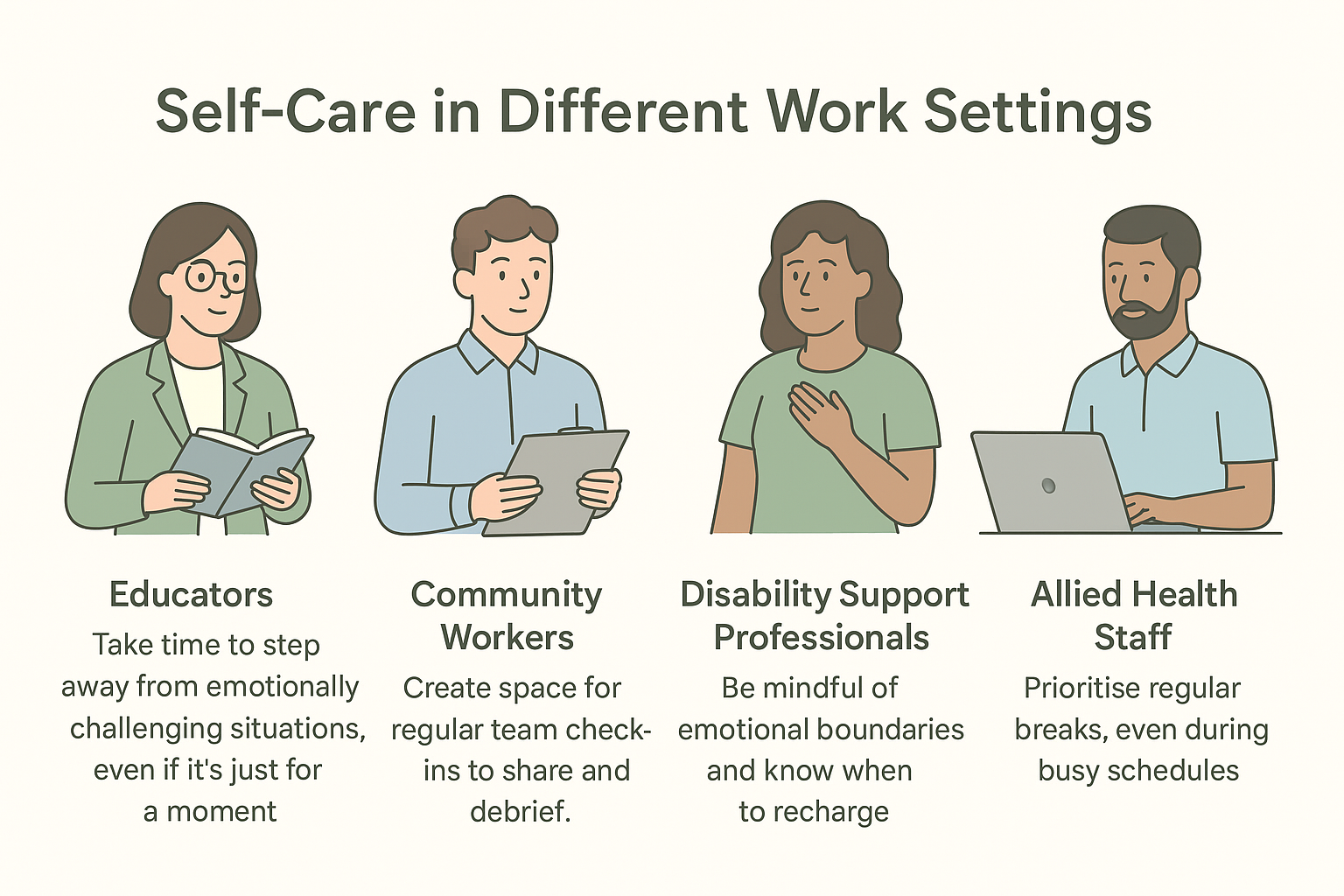
Self-Care in Different Work Settings
- Educators: Take time to step away from emotionally challenging situations, even if it’s just for a moment.
- Community Workers: Create space for regular team check-ins to share and debrief.
- Disability Support Professionals: Be mindful of emotional boundaries and know when to recharge.
- Allied Health Staff: Prioritise regular breaks, even during busy schedules.
Overcoming Guilt Around Self-Care
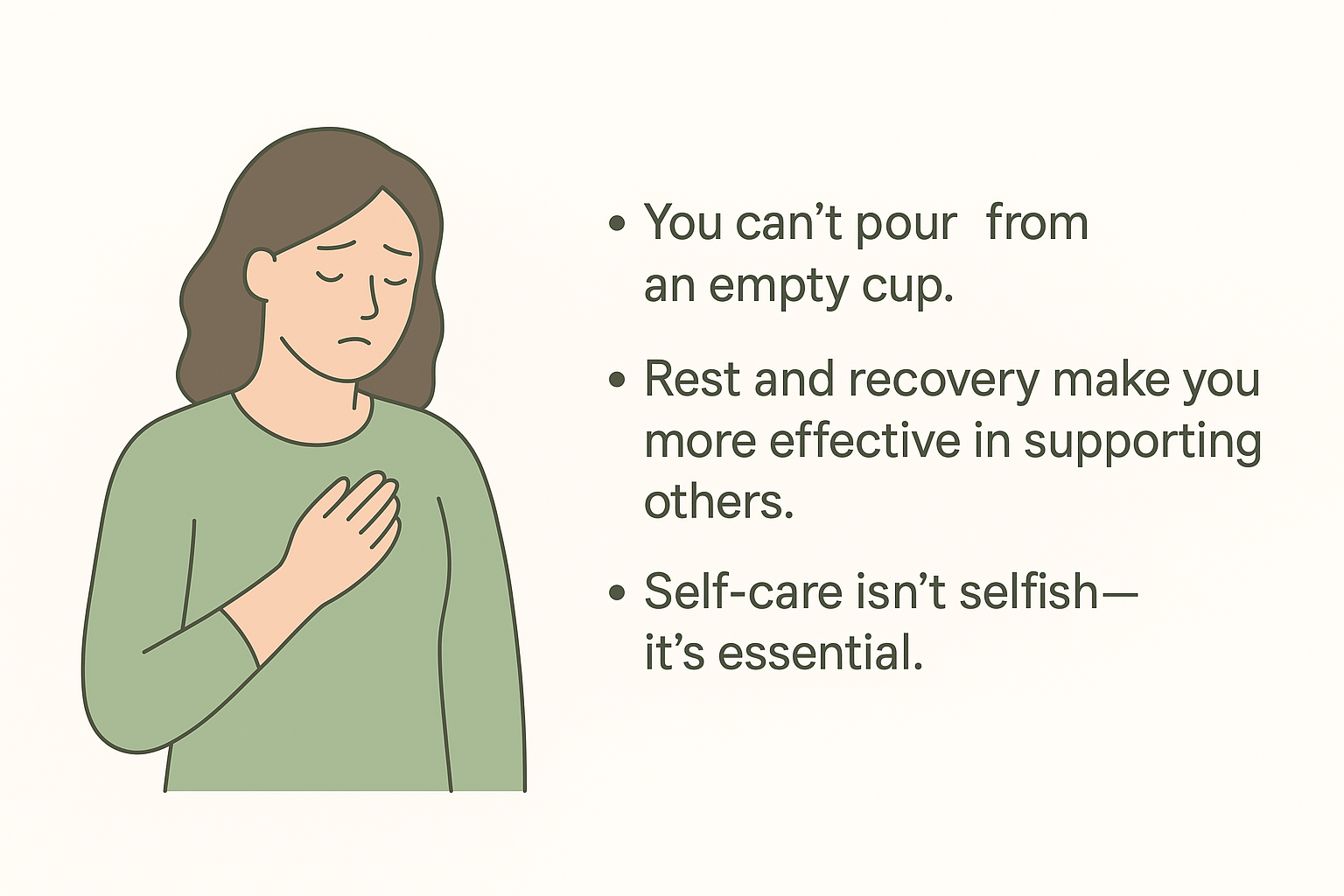
Many accidental counsellors experience guilt when taking time for themselves, feeling they should always be available for others. Remember:
Final Thoughts
Sustainable self-care isn’t about grand gestures; it’s about small, consistent actions that keep you emotionally and physically well. As an accidental counsellor, your capacity to support others relies on your ability to support yourself first.
Make self-care non-negotiable, and remember: taking care of yourself isn’t taking away from others—it’s how you continue to show up fully for them.
Visit previous article here: Silent Signals: How to Read Non-Verbal Cues as an Accidental Counsellor
For more information about the Accidental Counsellor Training go to: http://accidentalcounsellor.com/
Interested in attending face to face? Check our venues here.
We also have online sessions available: 3 Hour Training | Full Day Online Training
To invite us in-house to present to your staff or team, leave your details here for a quote and more information.